

Sacred Hieroglyphs
Analysis of a song by The Oh Hellos

My first catechist was music. Switchfoot taught me to long for heaven, Kings Kaleidoscope taught me to revel in grace. For all the flak that the maximally broad umbrella of “Christian rock” gets,1 it is impossible for me to imagine what my interior life might look like were it not for spiritually rich lyrics rolling out over distorted electric guitars.
I will admit that I regard my single-minded obsession with Christian things as my least Catholic trait. To be really “catholos” is to love the whole, the entire, everything beautiful and true. It would ideally mean appreciating Nirvana and Mac Miller and everything else that manages to touch the transcendent.
Alas, that is not me. Yet my narrow vineyard has flowered with its own fruit. Because I only want to listen to Christian music, and I have some musical standards, I’ve spent about 8 years building a playlist of Christian music that I think does not suck. (My taste has evolved over time, and there are many songs there I wouldn’t add now, but they stay because I’m emotionally attached. We all have problems.) Scattered throughout the sprawling 300+ tracks, there is a handful that it would not be an exaggeration to say taught me Christianity. I want to talk about one of them.
Hieroglyphs by The Oh Hellos
Give it a listen before continuing.
The first verse is already off to the theological races.
Stamping your heels along with the drum
Praying the serpent's underneath one of 'em
Like there's some villain left to defeat
Instead of a dance with a rhythm and beat
This song addresses someone whose faith has been warped by slavish fear. They’re doing the right motions, moving “along with the drum,” but they’re not dancing. For them, Christianity is purely negative; its highest aspiration is to avoid sin. That’s better than nothing, to be sure, but not even that is going very well; “stamping” and merely “praying that the serpent’s underneath one of ‘em” give the image a blind, frantic cast. Like a person with their eyes closed desperately trying to smash a cockroach but too afraid even to check if they got it.
This attitude betrays a misunderstanding of the Christian life. Satan, the serpent, has already been defeated. God won. We need to uproot the thorns of sin in our own lives, to be sure, but that’s not the point. The point is to enjoy friendship with God, to dance to his drum, as it were. Thorn-clearing serves dancing, and not vice versa.
Cause you've been too busy thinking ahead
Of where we're all going after we're dead
To maybe consider our bodies are worth
More than the dust that we can return
“Avoid Hell!! Avoid Hell!! Every moment I could do something that damns me forever if I die at the wrong time!! Ahhhhhhh!!!!”
We’ve all known that person. Most of us have been that person at one time or another. But it’s an obsession that blinds us to the gifts God is giving us right here, in the ever-fleeting present. We are dust-bound, sculpted from clay and given a very fragile hold on life. But the weakness of this condition is not to be despised. We are dust, but we are not only dust.
To the ground again
We turn that old wheel round again
The “old wheel” is described in Ecclesiastes 1:9 - “What has been will be again, what has been done will be done again; there is nothing new under the sun.” It’s not just that we’re prone to sin and decomposition, destruction of soul and body, it’s that the whole system of life on earth seems to repeat without going anywhere. People are born, make the mistakes of their fathers’ fathers, and die. “We turn that old wheel round again.” If there is anything beyond the daily crush, it is certainly hard to spot.
Well, even the great celestial hieroglyphs
Are bodies of dust illuminated, and if
The heavens can be both sacred and dust
Oh, maybe so can the rest of us
This is the only version of “You are made from the stuff of stars” that I have any interest in at all. The revelation that stars are just big balls of burning gas might threaten to debunk them, to rob them of their glory. If they’re the same dust we’re grubbing about in down here, how special can they be? But consider this: the stars are obviously beautiful. They are vast, fiery words in the sky given by God to mark times and seasons; they tell us of the hand that set everything in motion. And if the stars can be both sacred and dust, so can the rest of us. So can you.
Cause I've seen the line of ocean and shore
The tumbling tide of water and soil
And I've seen the day's fading begin
The gradient wake of the sun that spins
It’s not just the stars. Here, on the Blue Marble, there are daily and hourly rhythms beckoning us to God’s cosmic dance. You don’t have to wait for the afterlife. You can meet your maker today, if you like. His music is going to come wafting through the shore and the sunset and the skies whether you join in or not; you may as well dance with us, with Him.2
Around again
It'll burn that old wheel down in the end
It took me some time to understand this last line. We seem to have arrived at a redeemed vision of time’s cyclical dimension. So why does the speaker agree to burn it down now rather than when it was bumming us out in verse 2? Look again, and note what’s being burned down: it’s not the cycles we were presented with in the preceding verse, the rhythms of sea and sun. Just the opposite; the sun is what will burn down the “old wheel.” In the end, the futility of human labor, the endless repetitions of violence and revenge, the rise and crash of empires, will all be burned away like the hevel3 that it is. It will be all dance and no drudgery.
The music of the song aids its argument. A professor of mine once described The Oh Hellos performing live as “joy incarnate.” There is a kind of wild, almost Dionysian delight to the track. This dance isn’t a solemn waltz (though that also has its place). It’s unabashed revelry. I can’t speak for everyone, but my own life as a Christian is shot all through with this energy. When I consider the “tumbling tide of water and soil” and the “gradient wake of the sun that spins around again,” I have the sense that the whole thing might fly apart at any moment to expose the divine machinery, trillions of angels bustling about in great rivers like the love of God poured out in a living stream that moves the sun and other stars.
I hope you have that sense, too. You sleep under God’s hieroglyphs.
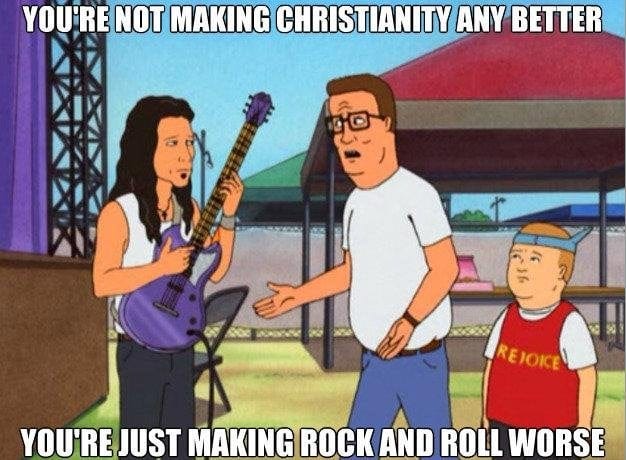
A liturgical dancing joke right here would make like 3 people laugh so hard. But for real though, in The Spirit of the Liturgy, Ratzinger talks about how the seasons, and even the cycle of day and night, are a kind of cosmic liturgy imitating the death and resurrection of Christ.
The word often rendered “vanity” or “meaningless” in Ecclesiastes. It literally means “vapor.”
Incidentally, vanity in the Hebrew version of Ecclesiastes is אבל: Abel of Abels all is Abel.